
Researchers at the Intergroup Relations and Social Justice Lab view poverty as a systemic, structural phenomenon. This stance suggests that rather than stemming from personal or moral failures, poverty and inequality arise from intentional policy choices which reflect the values of a society.

The following facts on poverty provide a snapshot of the current situation in Canada, where approximately 4.9 million experience poverty and it’s negative consequences. More information on poverty in Canada and B.C. can be found using the links at the bottom of this page.
Who experiences poverty? Aren’t all Canadians equally likely to experience poverty?
Yes and No,
Almost all Canadians are vulnerable to life’s conditions, including accidents, disease or other circumstances that can impede one’s ability to earn an income, and many Canadians have also felt the impact of inflation, all of which increase one’s chances of experiencing poverty.
It’s important however, to highlight that many Canadians do not start out on an equal playing field, and there are policies and government actions that have made it difficult for families to break poverty cycles.
Minorities in Canada such as Indigenous peoples, persons with disabilities, ethnic minorities and seniors make up a significant proportion of those living in poverty. A lack of access to affordable education, affordable housing, affordable childcare and living wages perpetuate the cycle of poverty, as it makes it difficult for individuals to generate generational wealth. The different placement of starting lines in life means that accidents or rising costs of living that would be hard for some are detrimental to others.

Many of the people living in poverty are also Canada’s most vulnerable, for instance:
- 1/3 Canadians living in poverty have mental health challenges
- 1/5 Canadians living in poverty are children
- 1/5 newly immigrant children are living in poverty
- Single parent families, transgender and nonbinary people, Indigenous people, racialized
people, refugees, and recent immigrants remain the most affected by poverty in Canada - 8.9% of food bank users are seniors, and 11.3% of food bank users are on pension
income - 49% of food bank users are on social assistance or disability assistance
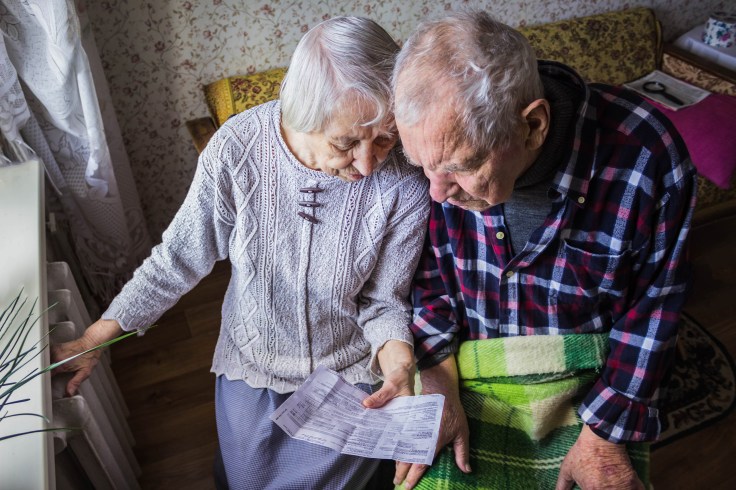
The widening of the wage gap between Canada’s lowest and highest income earners
Inflation disproportionately affects the lowest earning Canadians. According to Poverty Institute of Canada, inflation for low-income earning Canadians is approximately 2.9% higher than their high-income earning counterparts. The explanation for this lies in the fact that low income earners spend a much higher portion of their income on basic household expenses, items which have increased in cost the most with inflation. This means that while inflation is an issue that affects everyone, it’s much more detrimental to low income earners.

Poverty in Indigenous communities
Poverty in Indigenous groups remains extremely high, both on and off reserves. Canada officially ranks 13th (relatively high) on the UN Human Development Index. However, the rate of poverty within Indigenous communities (25%) remains much higher than the national poverty rate (8.7%).
Approximately 29.5% of Indigenous children live in poverty, while the poverty rate for non-Indigenous children sits around 12.5% (BC Child Poverty Report Card).
Approximately 44% of Indigenous people’s have financial difficulties meeting their needs.
Won’t getting a job solve poverty?
A significant portion of those in poverty who are eligible to work are employed, the issue however is that many necessary jobs do not provide a high enough income for people to make ends meet. For instance, a report from Food Banks Canada suggests that around 1/7 individuals accessing community food banks are employed.

Stagnant wages in a time of increases to cost of living mean that the amount of money required to make ends meet greatly surpasses actual wages. For instance in Vancouver, Canada’s second most expensive city, the poverty line (minimum income required to obtain life’s necessities) sits at around $52k/year, while the BC minimum wage affords an annual amount of $32K/year. Since around 10% of Canadians earn a minimum wage, this means that at least 10% of working citizens are not able to meet their needs while working full-time.
Approximately 1/3 children living in poverty also have at least one parent working full-time. Employment programs to support Canadians in finding careers can be a valuable aspect to a poverty reduction strategy, but they will not solve poverty on their own.
Poverty reduction and BC’s plan
Tackling poverty will require a multileveled and dynamic approach that addresses all the sources of people’s economic strain.
In 2019, the BC NDP implemented TogetherBC, BC’s first poverty reduction strategy. The strategy aims to cut poverty in BC by 25% by 2024
BC has outlined 6 priority areas to invest in to reduce poverty by the outlined goal levels, including:
- Affordable housing
- Family and child support
- Expanding access to education and vocational training
- Increasing the amount of available jobs
- Improving income support
- Investing in programs that promote social inclusion
For more facts and information about possible solutions to end poverty in British Columbia as well as Canada, please visit:
 Making Ends Meet